5 Spanish UNESCO Sites of Interest
Just outside Burgos lies one of Europe’s most extraordinary archaeological treasures: Atapuerca, a place where you can quite literally walk through nearly a million years of human history. The caves and excavation sites here have revealed some of the earliest evidence of human life in Europe, including remarkable fossils, tools, and other traces of our ancient ancestors. Visiting Atapuerca is far more than seeing an archaeological site—it is a chance to stand where early humans once lived and to imagine the long journey of survival, discovery, and evolution that eventually led to us.

Atapuerca Exploration
South of Madrid, the historic town of Aranjuez offers a beautiful blend of royal grandeur, gardens, and riverside scenery. At its heart stands the magnificent Royal Palace of Aranjuez, surrounded by elegant gardens filled with fountains, statues, tree-lined avenues, and carefully designed landscapes created for generations of Spanish royalty. A visit here feels like stepping into the leisurely world of the Spanish court, where architecture and nature were designed to complement one another. It is an ideal destination for travelers who enjoy history, beautiful gardens, and a slower, more graceful side of Spain.

Palace of Aranjuez
Nestled in the La Rioja region, these monasteries represent the birthplace of written Spanish language. San Millán de Suso, the older of the two, contains some of the earliest surviving manuscripts in Spanish, while Yuso monastery preserves a rich collection of medieval documents and religious art. The monasteries are not only architectural marvels but also cultural beacons, showcasing the linguistic and literary heritage of Spain.

San Millan de Suso
High in the dramatic interior of Gran Canaria, Risco Caído reveals a fascinating world created by the island’s pre-Hispanic inhabitants. Its caves, settlements, and sacred spaces contain mysterious geometric designs and carefully positioned openings that appear to have been connected with astronomy, ritual, and the changing seasons. Exploring this landscape gives visitors a very different view of the Canary Islands—one far removed from the beaches and resorts—and introduces an ancient culture that developed its own spiritual traditions, art, and relationship with the natural world. For travelers interested in archaeology and lesser-known history, Risco Caído is one of Spain’s most intriguing destinations.

Risco Caido Archaelogical Site
Few places in Barcelona capture the imagination quite like Park Güell, Antoni Gaudí’s colorful and fantastical hillside masterpiece. Winding paths lead past mosaic-covered walls, whimsical structures, curving stonework, and the famous dragon fountain, all designed with the organic shapes and playful creativity that made Gaudí one of the world’s most distinctive architects. The park feels almost dreamlike, as though architecture and nature have blended into one enormous work of art. From its terraces, visitors are rewarded with sweeping views across Barcelona toward the Mediterranean, making Park Güell not only one of the city’s most recognizable landmarks, but also one of its most enjoyable places to explore.
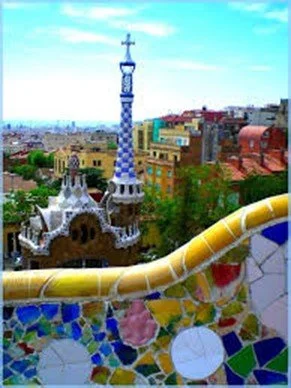
Parque Güell - Barcelona, Spain
ogether, these five UNESCO World Heritage sites reveal just how varied Spain can be. In a single journey, you can explore the origins of humanity, walk through royal gardens, visit the birthplace of written Spanish, discover the sacred world of an ancient island culture, and experience the extraordinary imagination of Gaudí. Each offers something completely different, and together they show why Spain rewards travelers who venture beyond its most famous cities and discover the remarkable stories hidden across the country.