6,000-Year-Old Monuments Reveal Hidden Patterns Across the Spain–Portugal Border
For more than 6,000 years, ancient stone monuments have stood quietly in the mountains along the border of Spain and Portugal, but new research suggests they were placed with far more purpose than anyone once thought. These burial mounds were not scattered randomly across the landscape. Instead, prehistoric communities appear to have carefully selected dramatic, meaningful locations, turning the natural world around them into something like a symbolic map of memory, ritual, and identity.
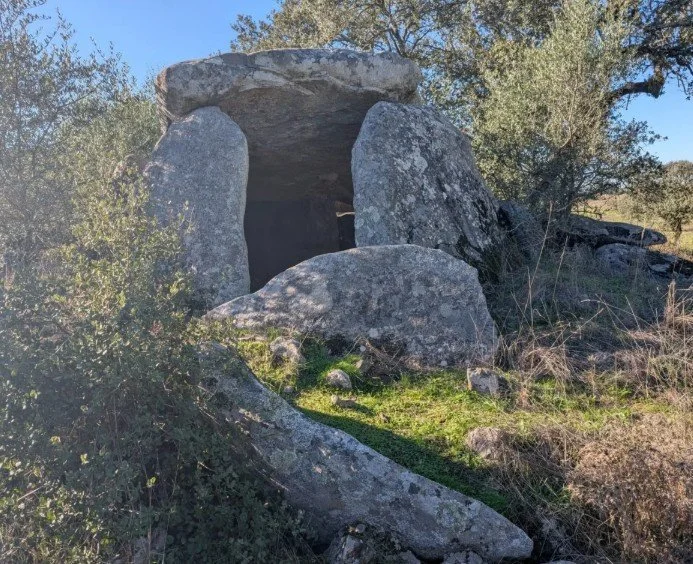
To figure this out, archaeologists studied the Serra do Laboreiro mountain region in northern Portugal and Galicia, Spain. Rather than digging into the monuments themselves, they focused on the terrain around them. Using LiDAR, a technology that can scan the ground through thick vegetation, they checked old records and confirmed which sites were actually genuine prehistoric monuments. Out of 269 recorded locations, only 178 were verified, giving researchers a much more accurate group of sites to analyze.
The researchers then compared those confirmed monument locations to nearly 1,000 random points across the same area. They looked at factors such as elevation, slope, proximity to ridges, closeness to rocky outcrops, and the shape of the horizon. The results were striking. Seven of the eight landscape features they tested showed strong statistical significance, meaning the monument builders were clearly making deliberate choices about where these structures should go.
What makes this especially interesting is the kind of places they preferred. The monuments were often built on high ground, close to ridgelines, rocky features, and natural boundaries, in places where the horizon had a strong and distinct shape. The amount of land visible from the site did not matter as much as expected. That suggests these communities were not simply choosing locations for broad views, but for places that already felt important, visually powerful, and deeply connected to how they understood their world.