Byzantine Fortified Monastery Identified in Spain
Archaeologists working at El Monastil, near Elda in Alicante province, have identified what they describe as a rare Byzantine fortified monastic settlement dating to the second half of the sixth century, during the era of Emperor Justinian. The site appears to have combined religious and military functions, with strong defensive walls, a controlled entrance, and interior spaces interpreted as a church and monastic quarters. Researchers say this helps confirm that the Eastern Roman, or Byzantine, Empire maintained a more substantial presence in southeastern Iberia than was once assumed.
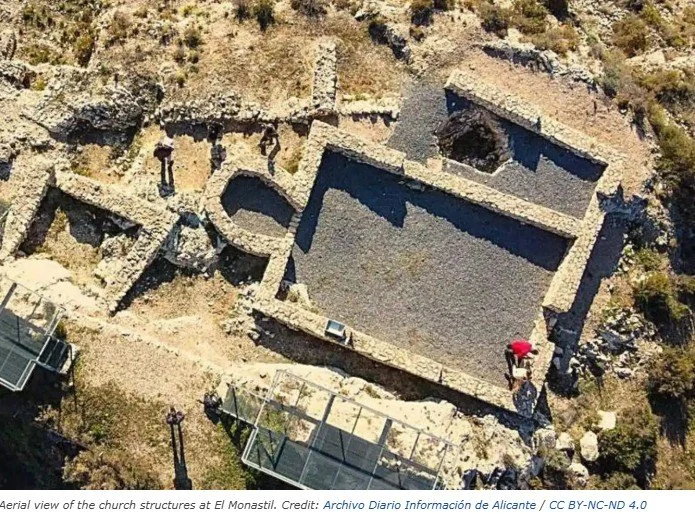
What makes the discovery especially important is the range of artifacts found there. Excavators reported fragments of a marble altar made from Greek Parian marble, an ivory pyx likely used to hold consecrated wafers, and a notable group of Byzantine bronze weights associated with taxation and administration. Together, these finds suggest that the monastery was not simply an isolated religious retreat, but part of a broader Byzantine frontier system in which clergy, soldiers, and imperial administration were closely connected.
The site also matters because it sheds light on a poorly documented chapter of Spanish history. Byzantine control in parts of southern and southeastern Spain after Justinian’s western campaigns has long been known from texts, but archaeological evidence has been comparatively scarce. El Monastil offers physical proof of how Byzantine authority may have been organized on the ground, especially along the frontier with the Visigothic kingdom, where defense, worship, and governance could all be concentrated in one strategic location.
In a broader historical sense, the discovery enriches our understanding of the cultural and religious diversity of late antique Iberia. It shows that Alicante province was not merely a peripheral zone, but a place where Roman, Byzantine, and Visigothic worlds intersected. The monastery stands as evidence of long-distance connections across the Mediterranean, linking southeastern Spain to the political power, artistic traditions, and Christian practices of the Byzantine Empire.