Ceuta and Melilla Are Still Part of Spain Even Though They Are In Africa
Ceuta and Melilla are two incredible little cities sitting on the northern coast of Africa—but guess what? They’re actually part of Spain! Even though they’re on a totally different continent, they’ve belonged to Spain for hundreds of years. You can spot them right across the Mediterranean Sea, just a short distance from southern Spain. Their location is amazing—like two watchtowers between Europe and Africa—and that’s exactly what made them so important for trade, travel, and defense throughout history.
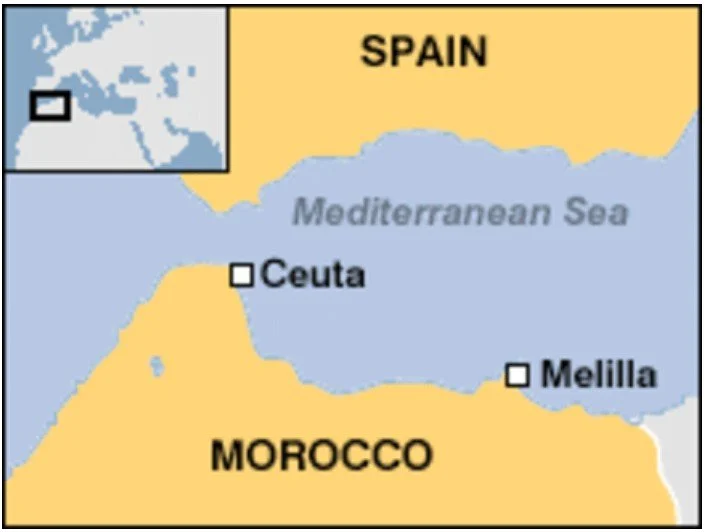
Ceuta and Melilla
The story of how Spain got Ceuta and Melilla is full of adventure. Ceuta was first taken by Portugal in 1415, back when explorers were sailing off to discover new worlds. Later, when Portugal and Spain joined under the same king, Ceuta officially became Spanish territory. Melilla, on the other hand, was captured by Spain in 1497—right around the same time Columbus was sailing to the Americas! Both cities turned into vital military bases and trade hubs, guarding the busy waters of the Strait of Gibraltar and connecting two great continents.
Even as Spain lost most of its colonies over the centuries, it held tightly to Ceuta and Melilla. Today, they’re known as “autonomous cities,” which means they have their own local governments but are still part of Spain. The people there speak Spanish, use the euro, and have full Spanish citizenship—all while living just steps away from Morocco! Imagine walking down a street where Spanish cafés, African markets, and Mediterranean views all blend together—it’s a mix of cultures you won’t find anywhere else.
Ceuta and Melilla aren’t just dots on a map—they’re living history. They tell the story of explorers, empires, and centuries of connection between two worlds. To Spain, they’re proud reminders of their past. To Morocco, they’re part of an ongoing conversation about identity and borders. But to anyone who visits, Ceuta and Melilla are vibrant, colorful cities where Europe and Africa meet—and where history comes alive in every street and seaside view!