Dinosaurs of the Ichnite Route, Soria, Spain
Instead of just showing what a dinosaur looked like, these fossil footprints show where it stepped, how it moved, and sometimes even whether it may have been traveling alone or with others. In the highlands of northern Soria, these tracks were left around 140 million years ago, during the Early Cretaceous, when the region looked nothing like it does today.
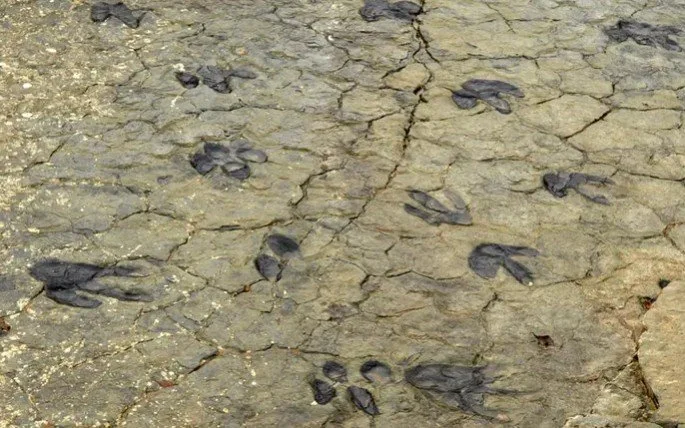
What makes Soria especially important is the sheer number and variety of tracksites. The Ichnite Route includes multiple fossil localities spread across the region, with places like Bretún, Villar del Río, Santa Cruz de Yanguas, and Fuentes de Magaña becoming major points of interest. Some sites preserve trackways so clearly that you can follow the sequence of steps across the ancient ground surface. For someone interested in paleontology, that is a big deal, because a trackway can reveal behavior, speed, stride length, and even clues about body posture in ways that isolated bones often cannot.
Another reason these tracks matter is that they help paleontologists reconstruct an entire ecosystem. The footprints found in Soria were made in ancient muddy environments that later hardened and fossilized. Over time, erosion exposed them again. By studying the size, shape, and spacing of the tracks, researchers can identify different types of dinosaurs, especially theropods and ornithopods, and learn how they interacted with the landscape. In some cases, the arrangement of tracks has even raised questions about whether certain dinosaurs may have moved in groups, which makes the sites valuable for studying dinosaur behavior, not just anatomy.
For a young paleontology fan, the Ichnite Route is the kind of place that makes prehistoric life feel real. You are not just imagining dinosaurs from skeletons in a museum. You are seeing the actual marks their feet pressed into the ground millions of years ago. That is what makes Soria so impressive: it preserves a moment of life, not just death. The tracks turn the landscape itself into a fossil record, and that gives you a much more vivid connection to the animals that once lived there.