Granada’s Roma Sacromonte Hillside
The Sacromonte Hillside in Granada, Spain, is one of the city’s most unique neighborhoods. It sits above the Darro River Valley and looks across to the famous Alhambra. Sacromonte is best known for its cave houses, which were carved right into the hillside. For centuries, the Roma (Gypsy) community lived here, and their culture has shaped the area’s traditions and identity.
After Granada fell to King Ferdinand and Queen Isabella in 1492, many groups, including Muslims, Jews, and Roma, were forced to leave their homes. Some of them moved into the caves of Sacromonte. The caves provided safe and practical shelter, they stayed cool in the summer, warm in the winter, and soon became permanent homes. Over time, these hillside dwellings turned into a lively community with its own way of life.
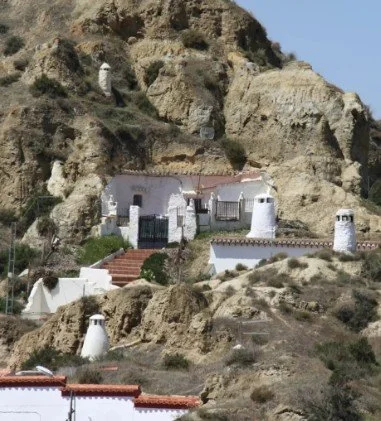
Roma cave dwellings in Andalucía, Spain
Sacromonte also became important for religious reasons. In the 1500s, relics and writings believed to be from early Christians were found there. This discovery led to the building of the Abbey of Sacromonte, which became a pilgrimage site. Pilgrims would climb the hillside to honor the relics, making the area not only a cultural space but also a sacred one tied to Spain’s Catholic history.
The neighborhood is most famous today for flamenco music and dance. The Roma community created a special type of flamenco celebration called zambra, mixing influences from Moorish, Jewish, and Roma traditions. Visitors can still watch these powerful performances in the caves of Sacromonte. With its history, culture, and stunning views, Sacromonte remains one of Granada’s most important and colorful neighborhoods.