Huelva, in the far southwest of Andalusia, is a city shaped by the sea, ancient trade, and centuries of cultural exchange. Set near the mouths of the Tinto and Odiel Rivers, it has roots stretching back more than two thousand years, with Phoenician, Tartessian, Roman, and later Christian influences leaving their mark on the region. Unlike some of Spain’s more heavily visited cities, Huelva offers a quieter and more local atmosphere, making it an appealing destination for travelers who enjoy history without the crowds.
One of the most important chapters in Huelva’s story is its connection to the voyages of Christopher Columbus. Just outside the city, the towns of Palos de la Frontera and Moguer played key roles in the preparations for the 1492 expedition, and the nearby Monastery of La Rábida is closely associated with Columbus and his plans for the voyage. Visitors interested in exploration and maritime history will find this area especially rewarding, with monuments, replicas, and museums that help bring the age of discovery to life.
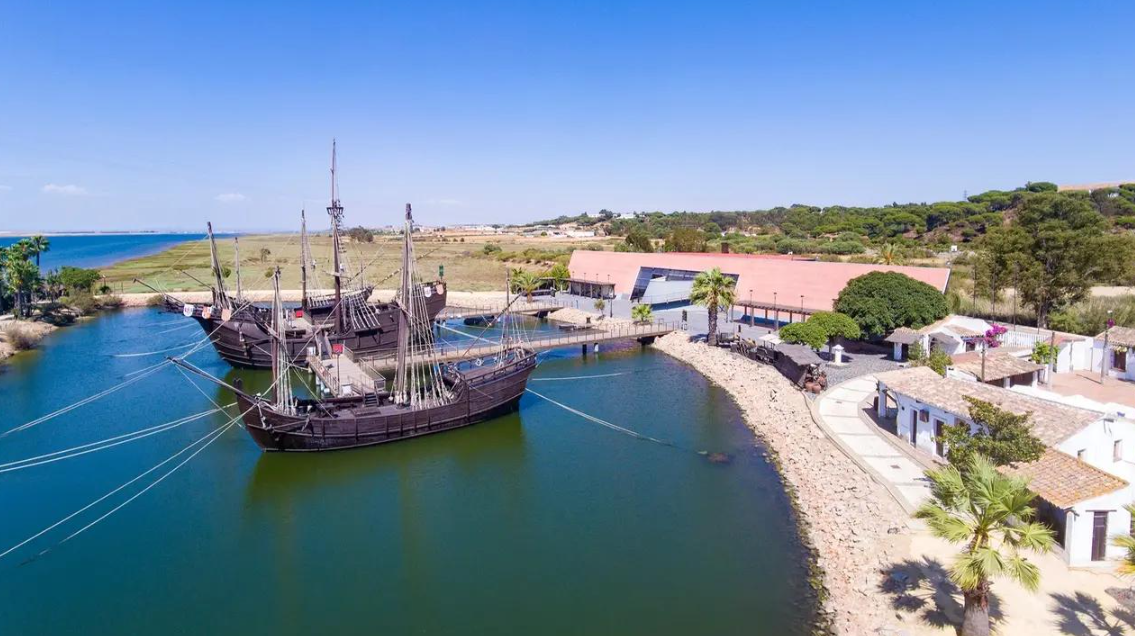
Huelva, Spain
Huelva is also an excellent base for exploring the natural beauty of the surrounding coast and countryside. The nearby beaches of the Costa de la Luz are broad, sandy, and often less crowded than those of other Spanish resort areas, while the wetlands and protected landscapes near the Odiel Marshes offer opportunities for birdwatching and nature walks. Farther inland, the province is known for rolling countryside, whitewashed villages, and the famous ham-producing region around Jabugo.
Food is one of the great pleasures of visiting Huelva. Fresh seafood, prawns, clams, and locally caught fish feature prominently in the city’s restaurants and markets, while the surrounding province contributes excellent cured ham, olive oil, and regional wines. With its combination of ancient history, maritime heritage, natural scenery, and relaxed Andalusian character, Huelva offers visitors a rewarding glimpse of southern Spain at a slower, more authentic pace.