La Garma: Unlocking the Secrets of Spain’s Ancient Past
Deep beneath the hills of Cantabria in northern Spain lies La Garma, one of Europe’s most remarkable archaeological sites. Inside this cave system, researchers have found an exceptionally well-preserved record of human life dating back more than 16,000 years. Bones, stone tools, hearths, shelters, footprints, and prehistoric art remain close to where ancient people originally left them, giving archaeologists a rare opportunity to study not just individual objects, but how people actually lived during the Paleolithic period.
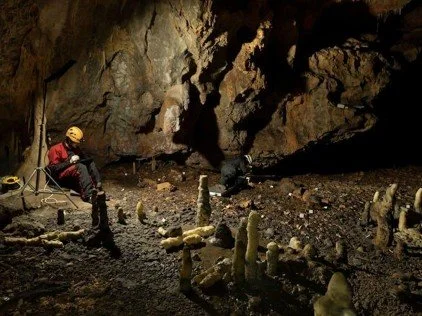
La Garma Cave
What makes La Garma especially valuable is that much of it has remained almost untouched for thousands of years. Because parts of the cave were sealed naturally, Spanish archaeologists have been able to study objects in their original locations. Instead of simply excavating and removing artifacts, researchers carefully document where everything is found, because location can reveal how people cooked, worked, slept, moved through the cave, and organized their daily lives. This careful approach reflects the growing importance of preservation in modern Spanish archaeology.
Researchers use advanced photography, 3D mapping, digital records, and other modern tools to study the cave while disturbing it as little as possible. These methods have helped reveal pathways, constructed steps, shelters, children’s footprints, and other signs showing that prehistoric people used the cave in complex ways. La Garma has also provided evidence from much later periods of Spanish history, including a Visigothic burial from around the eighth century, showing that the cave remained significant across thousands of years.
The importance of La Garma reaches far beyond the technology used to study it. The real achievement is the work of Spanish archaeologists and researchers, whose careful methods are helping protect one of Spain’s most important links to its distant past. Their work shows that archaeology is not simply about finding ancient objects; it is about understanding people—their families, habits, beliefs, and communities. By preserving La Garma while continuing to study it, Spain is helping ensure that this extraordinary record of human history remains available for future generations.