New Study Suggests Christopher Columbus Was From Spanish Nobility
For more than 500 years, people have argued about who Christopher Columbus really was and where he came from. In a 2026 a BioRxiv preprint steps into that mystery with a very modern twist: ancient DNA. Instead of trying to prove Columbus’s identity from legends, patriotic claims, or old rumors, the researchers looked at the remains of people buried in the crypt of the Counts of Gelves near Seville, a place the paper describes as holding the largest known concentration of Columbus’s direct descendants.
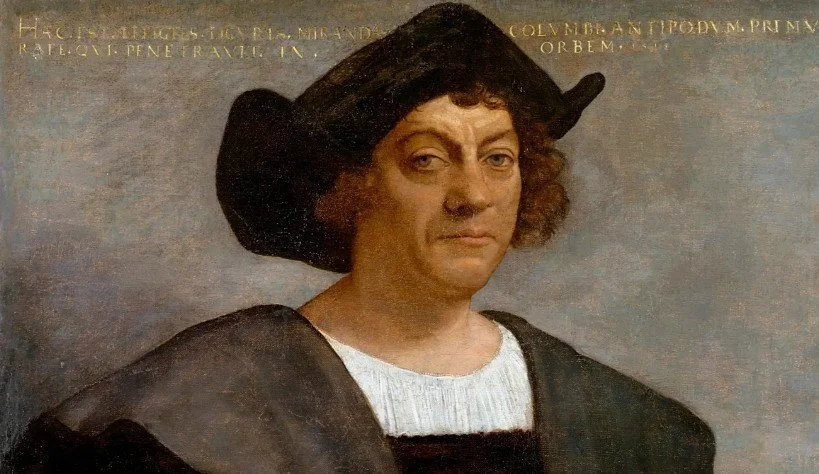
The heart of the study is a genetic puzzle. The team analyzed exhumed individuals from the Gelves family crypt and found an unexpected biological link between two people whose documented family trees did not seem to explain that connection. One of them was Jorge Alberto de Portugal, described in coverage of the study as a great-great-grandson of Columbus, and the other was María de Castro Girón de Portugal, a countess consort from a Galician noble line. That surprise pushed the researchers to go deeper, combining genetics with long genealogical reconstructions across many generations.
To test possible explanations, the researchers used computational family-tree modeling and what they call a “virtual knockout” approach. In simple terms, they checked which ancestor could explain the shared DNA signal, then removed that person from the model to see whether the connection disappeared. According to the preprint and reporting based on it, the standout candidate was Pedro Álvarez de Sotomayor, also known as Pedro Madruga, a powerful Galician nobleman. When he was removed from the model, the genetic link reportedly vanished, and no other tested ancestor explained the data as well.
That is why the paper is getting attention: the authors argue that their results provide genetic support for the idea that the Columbus lineage connects to old Galician and Navarrese nobility, rather than fitting the better-known Genoese origin story. That does not mean the paper proves, beyond all doubt, that Columbus himself was Pedro Madruga or that the debate is over. What it does claim is narrower and more careful: the descendants buried at Gelves appear to fit a lineage tied to those noble families, and that gives the Galician-origin hypothesis stronger support than it had before.
The most important reality check is that this is still a preprint, which means it has not yet been peer reviewed. The authors themselves acknowledge that the evidence is indirect because it comes from descendants, not from Columbus’s own DNA, and they say the results still need independent verification. So the fairest way to read this paper is not, “Mystery solved forever,” but rather, “A very old argument just got a serious new piece of evidence.” That makes it compelling, but not final.