Oldest Human Fingerprint in the World Discovered in Spain, Left by Neanderthals 43,000 Years Ago
At the San Lázaro rock shelter near Segovia, Spain, archaeologists have uncovered what is now considered the oldest known human fingerprint in the world, dating back approximately 43,000 years. This discovery, imprinted in red ochre on a granite cobble, has been attributed to a Neanderthal and is now recognized as the earliest symbolic object of its kind in Europe. The research, published in Archaeological and Anthropological Sciences, was conducted by a multidisciplinary team from the Complutense University of Madrid, the Geological and Mining Institute of Spain (IGME-CSIC), the University of Salamanca, and the Spanish Scientific Police. The finding challenges long-standing stereotypes of Neanderthals as lacking abstract thinking or symbolic behavior.
The rock was initially dismissed as an ordinary pigment-stained stone but was later subjected to high-resolution forensic methods, including scanning electron microscopy (SEM) and multispectral spectroscopy. These analyses revealed that the mark was an intentional fingerprint—likely from the index or thumb—left in freshly applied ochre pigment. The Middle Paleolithic layer in which the rock was found confirms the age of around 43,000 years, placing it at the end of Neanderthal habitation on the Iberian Peninsula. Unlike tools or weapons, this object shows no signs of practical use, which has led researchers to propose that it served a symbolic or ritualistic purpose.
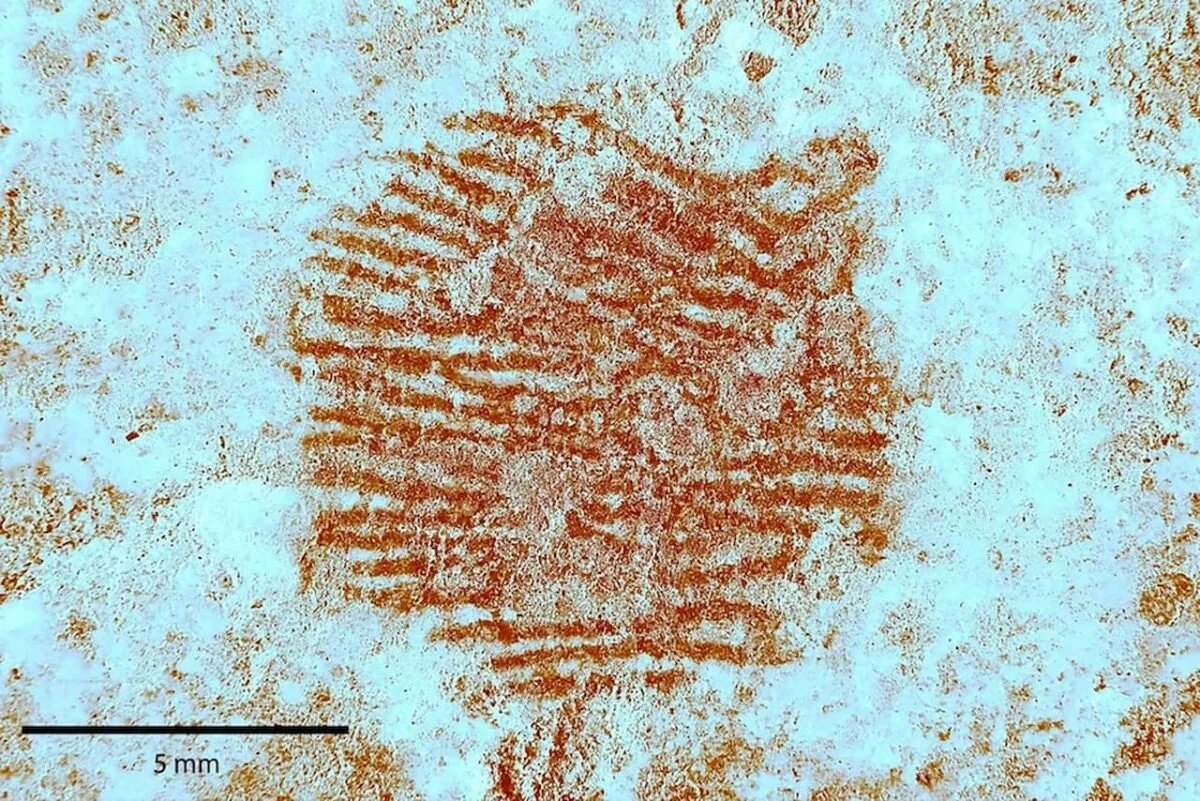
Neanderthal Fingerprint
To further confirm its human origin, experts in criminology applied modern fingerprint analysis techniques. They compared the ridge patterns of the print to modern human fingerprints, conclusively ruling out natural causes or animal origins. Their findings emphasized that the pattern and pigment placement could only result from a deliberate human act. In addition, chemical tests confirmed that the ochre pigment had been intentionally applied, further discrediting theories of incidental staining through environmental contact.
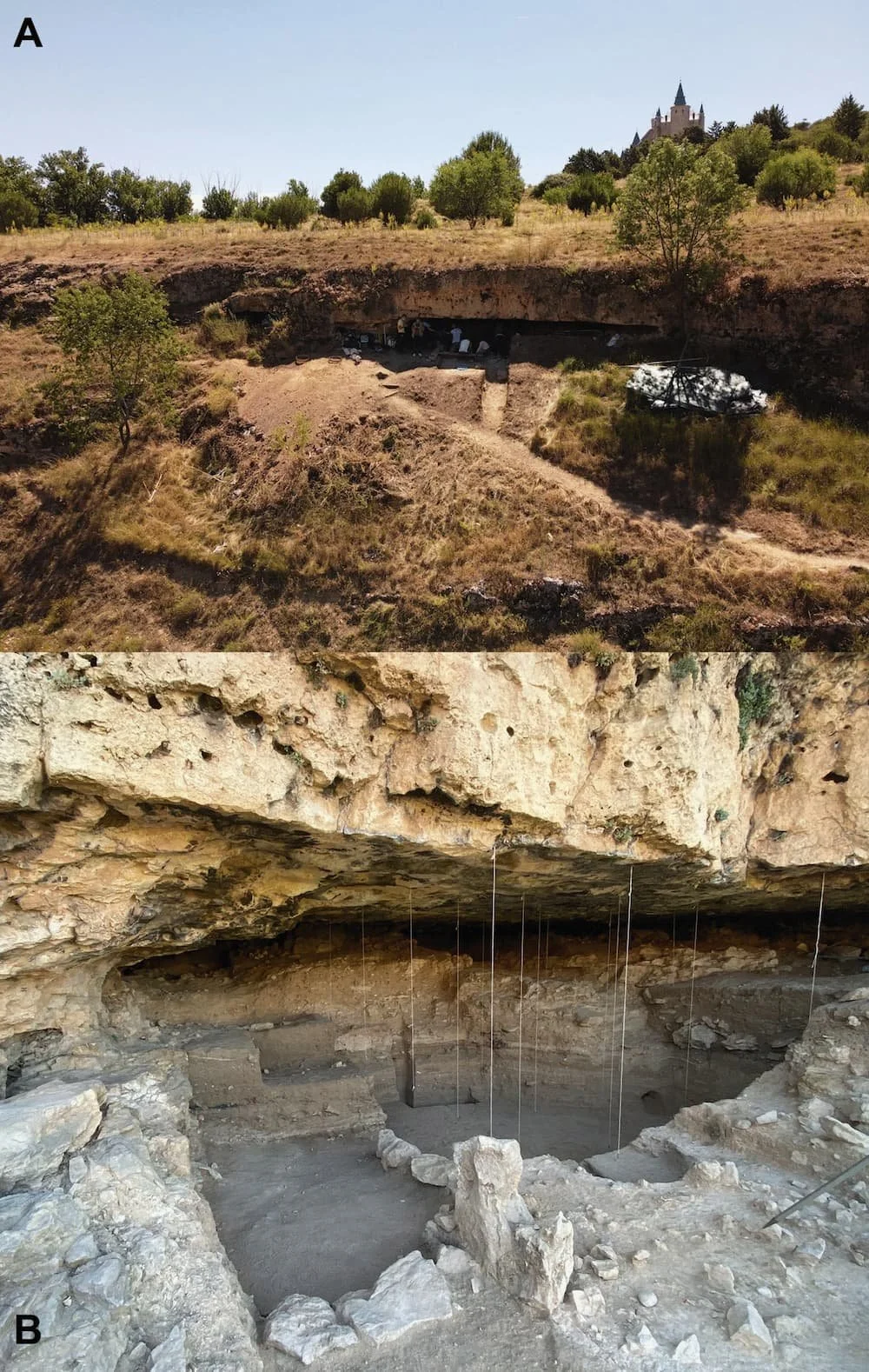
The Cave Where The Fingerprint Was Found in Segovia, Spain
This discovery positions Segovia—and more broadly the region of Castile and León—at the forefront of paleoanthropological studies exploring the cognitive abilities of Neanderthals. While prior evidence of Neanderthal symbolic behavior, such as cave art in Ardales or ornamental items, has been debated, the San Lázaro fingerprint provides concrete proof of deliberate symbolic expression. It reshapes our understanding of Neanderthal intellect and culture, offering a rare and personal glimpse into their capacity for abstract thought and identity (source: Archaeological and Anthropological Sciences via the First Settlers of Segovia project).