The Spanish Inquisition
The Spanish Inquisition was a very powerful and often feared part of Spain’s past. It started in 1478 when King Ferdinand and Queen Isabella wanted everyone in Spain to follow the Catholic religion. At that time, many people were Jewish or Muslim, but the rulers thought that if everyone believed the same thing, the country would be stronger. The Inquisition was created to find and punish people who were accused of secretly practicing other religions or breaking church rules.
But the Inquisition wasn’t only about religion—it was also about power. By controlling people’s beliefs, the rulers could control how they lived. Sometimes people were accused unfairly, just because someone wanted their property or didn’t like them. Trials were often unfair, and people could be found guilty with little or no proof. Some were even tortured until they confessed, which made the whole system very frightening.
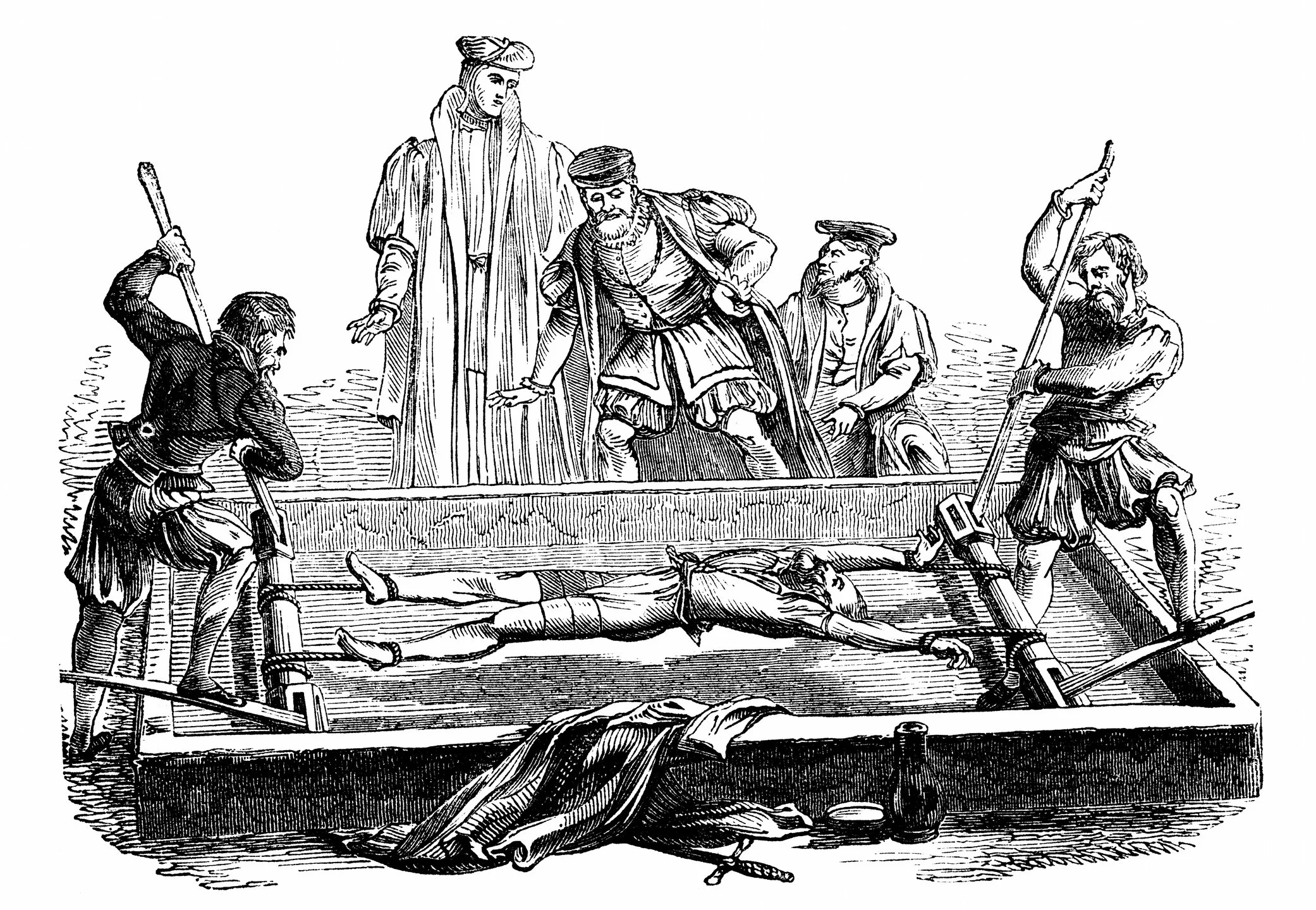
One of the torture devices used during the inquisition
The Inquisition also spread beyond Spain. It reached Spanish colonies in the Americas and even places like Italy and the Philippines. It lasted for more than 350 years and didn’t officially end until 1834. During that time, thousands of people were investigated. Not everyone was executed, but many faced other punishments, such as losing their homes, being put in prison, or being forced to wear special clothes that showed they had been accused.
Even though it was a harsh time, the Inquisition left behind a lot of records. These documents are useful for historians and genealogists who study family histories, especially for people with Jewish or Muslim ancestors. The records give details about how people lived, what they believed, and what they feared. They even describe family traditions, clothing, and holiday celebrations.
Today, the Spanish Inquisition is remembered as a dark chapter in history. It shows us what can happen when there is intolerance and unfair treatment. Learning about it reminds us how important it is to protect fairness, human rights, and the freedom to believe what we choose.