800,000 Year Ancestors – A new Species of Early Human
The Cave of Gran Dolina is one of the most exciting archaeological sites in all of Spain—and even in the world! It’s located in the Atapuerca Mountains near Burgos, in northern Spain, and has given scientists incredible clues about some of the earliest humans to live in Europe. Inside this cave, layers of earth hold fossils and tools that are nearly one million years old, making it like a time capsule that tells the story of how our ancient ancestors lived long before modern humans appeared.
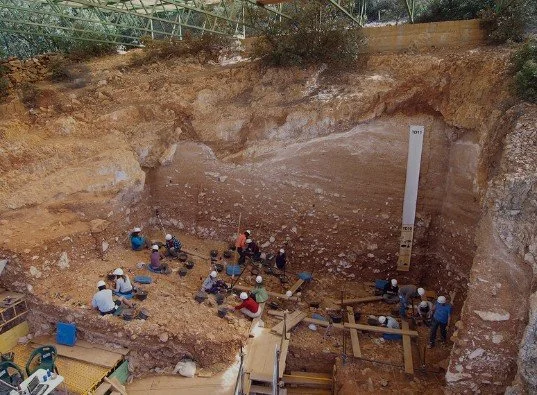
The Cave of Gran Dolina
What makes Gran Dolina so famous is the discovery of a new species of early human known as Homo antecessor. In the 1990s, archaeologists found fossilized bones belonging to young men and women who lived about 800,000 years ago. These ancient people had both modern and primitive features, which has led scientists to believe they could be an early ancestor of both Neanderthals and modern humans. The discovery completely changed what researchers thought they knew about when and how humans first arrived in Europe.
The people who lived in Gran Dolina weren’t farmers or city builders—they were hunter-gatherers. They made tools from stone, hunted animals for food, and used fire for warmth and cooking. Scientists even found animal bones with cut marks, showing how these early humans prepared their meals. Some evidence suggests that these prehistoric people may have practiced cannibalism, possibly as a survival strategy, something that continues to spark debates among researchers today!
Today, the Cave of Gran Dolina is a UNESCO World Heritage Site and a key window into our distant past. It helps scientists piece together the long story of human evolution and migration across Europe. For anyone who visits, walking near the Atapuerca caves feels like stepping back nearly a million years, into a world where the very first Europeans hunted, worked together, and learned to survive in the wild landscapes of ancient Spain.