Drought Reveals “Spanish Stonehenge” Older Than the Pyramids
After 50 years of immersion on the bottom of a basin, in Spain, a 5,000-year-old monument emerged.
There are 144 granite blocks on the megalithic site, which are over 6 feet high, known as ‘ Spanish Stonehenge. ‘ Its similarity to the UNESCO World Heritage site in Wiltshire is striking, but the Iberian version is made of smaller rocks.
The Spanish General ordered the construction of a hydroelectric dam at Peraleda de la Mata, near Cáceres in Extremadura, which was supposed to be condemned to the history books of the 1960s.
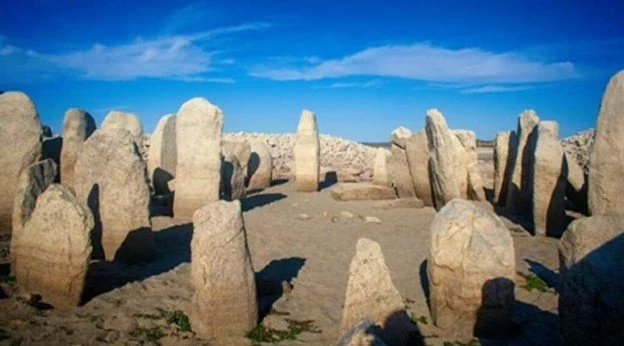
“Spanish Stonehenge”
However, a severe and prolonged drought has seen the structure emerge as the last drops of water vanished from the barren basin. Western Spain is being ravaged by a year-long drought and the Bronze Age structure, thought to be an ancient temple, can now be seen.
Hugo Obermaier, a German priest and amateur archaeologist, first found the site in 1925.
Due to the unfortunate decision-making of General Franco who opted to consign the site to obscurity when he commissioned a valley bordering the Tagus river to be flooded.
But before its rediscovery and subsequent demise, it is thought the stones would have centered around a central chamber for sun worship.
It is believed the Celts living in Iberia 4,000 years ago may have built the structure.
‘The stones have been brought from about five kilometers away to form this temple, which we think was used to worship the sun,’ Ángel Castaño, president of the Peraleda Cultural Association, told the Times.
‘In that way, it has similarities to Stonehenge but is obviously smaller.
‘People here had heard about them but had never seen them. We want the authorities to move these stones to the banks of the reservoir and to use them as a tourist attraction, as few people come to this area.’
Stonehenge’s enormous rocks are up to 30 feet in length, dwarfing the six-foot-tall single monoliths uncovered in Spain. There are more stones at the Spanish site, 1144 compared to 93 in Wiltshire.
However, Stonehenge’s monument covers 10,800 square feet (10,000 square meters), a far bigger area than the Spanish site.
Long-term plans for the preservation of the site are yet to be laid out, but Mr. Castaño met officials from the regional government yesterday to discuss the matter. If action is not taken now, he said, it could be many years before they are seen again.